
Regional Geology
Letšeng is situated some 3100 m above sea level in the Maloti Mountains of Lesotho in Southern Africa. The Letšeng kimberlites intruded close to the eastern edge of the Kaapvaal Craton and are preserved in Jurassic-age (ca. 184 Ma) basalts of the Lesotho Formation, Drakensberg Group. Following the break-up of the Gondwana super continent in the Late Jurassic to Early Cretaceous times, the Kaapvaal Craton was subject to numerous intrusions by kimberlitic material in two main phases: Early Cretaceous (ca 108 Ma – 150 Ma) and Late Cretaceous (ca 85 Ma – 95 Ma). The Main and Satellite pipes and associated dykes at Letšeng are part of the Late Cretaceous (ca. 90 Ma) Group 1 kimberlite occurrences comprising the Lesotho Kimberlite Province that is affiliated to the Kimberley and Gordonia Kimberlite Provinces of South Africa.

The regional geology of the northern highlands of Lesotho consists of (1) upper Karoo Supergroup sedimentary rocks (Molteno and Clarens Formations of the Stormberg Group) and (2) overlying Drakensberg Group (Lesotho Formation) basalts. Both the Karoo sediments and the Drakensberg basalts are intruded by dolerite dykes and sills. The base of the basalt sequence lies at approximately 1,600 masl, approximately 1,500 m below the present erosion level at Letšeng. Letšeng has undergone much less erosion than kimberlite pipes in other areas of southern Africa because of its location in the Lesotho Highlands at ~3,100 masl. The estimated level of erosion at Letšeng is 400-600 m.
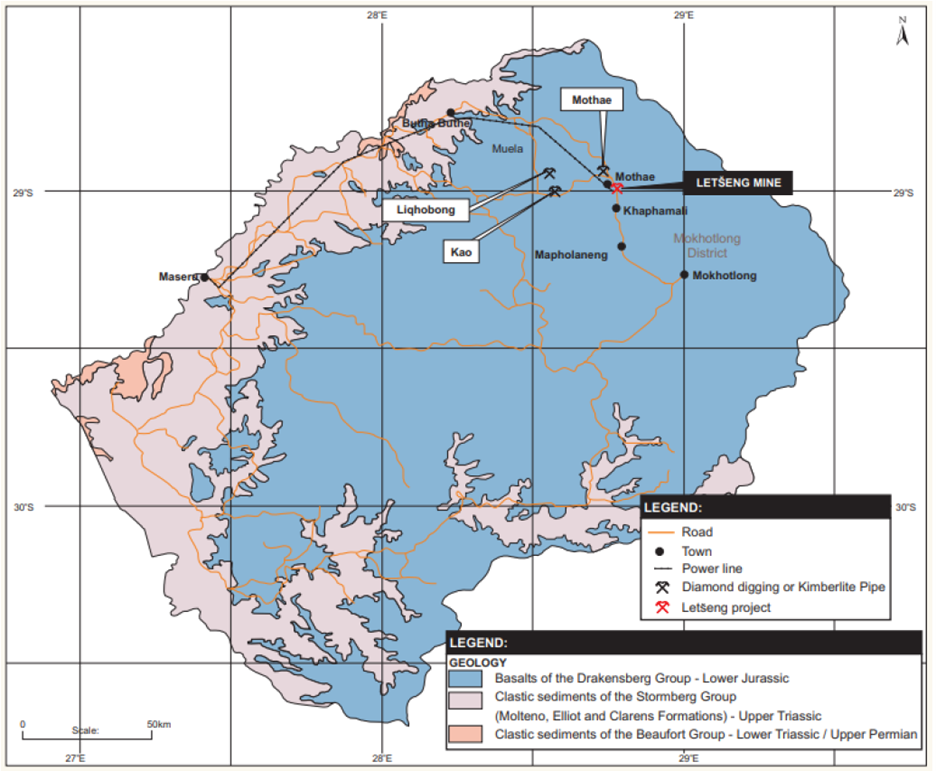
Letšeng Kimberlite Pipes
Letšeng is a primary diamond deposit consisting of two adjacent, vertical, steep-sided, downward tapering pipes. The pipes are named Main Pipe (15.05 ha) and Satellite Pipe (4.36 ha). Both pipes are infilled with a variant of Kimberley-type pyroclastic kimberlite (KPK), including KPK with extrusive features (KPKe), as well as coherent (CK), hypabyssal (HK) and resedimented volcaniclastic kimberlite (RVK). The presence of KPKe and RVK indicates an upper diatreme to crater setting of the Letšeng pipes, consistent with the estimated limited erosion in this area of Lesotho.
The pipe shapes and pipe infills show many similarities to other KPK-infilled pipes, including those from the type area, Kimberley in South Africa as documented in Hetman et al. (2018). However, the Letšeng KPK also has several unique characteristics compared to KPK at other localities: (i) the olivine displays complex morphologies and widespread breakage; (ii) olivine macrocrysts are small and many have serrated edges (iii) olivine microcrysts are coarse; (iii) there is an uncommonly high abundance of melilite in the groundmass; (iii) some of the melt-bearing pyroclasts have characteristics similar to those found in Fort à la Corne-type kimberlites (FPK). These atypical features can be attributed to the marginal or melnoitic nature of the magma and the upper diatreme to crater setting of the Letšeng pipes (Hetman et al., 2018).
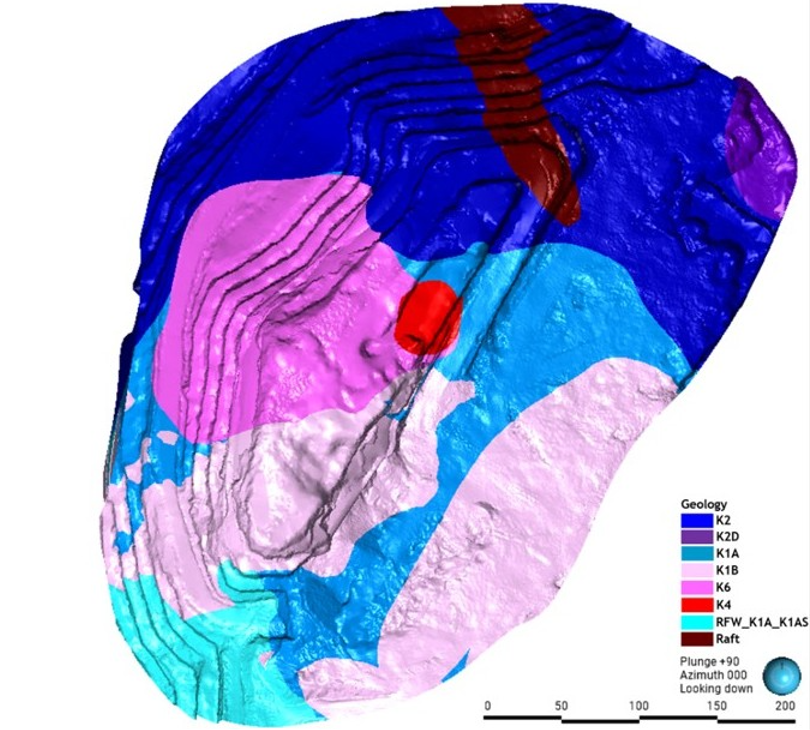
Main Pipe Geology
The current understanding of the geology is that the pipe consists of 13 internal domains – 11 kimberlite domains and two basalt xenolith/basalt breccia domains. Some of the kimberlite domains are separated by steep, sharp or gradational, cross-cutting internal contacts and have been shown to extend to depth in drill cores. However, the geology of the main K1 portion of the pipe (i.e., not K4, K6 or K2) is complex with shallower, irregular contacts between domains K1A, K1B-1, K1B2, K1C and the respective domains in the south of the pipe (RFW-K1S grouping). This is consistent with the upper diatreme / crater setting of Main Pipe in the portion mined and drilled to date, as is the presence of RVK in the K2 domain. Each domain is associated with different diamond packages and grades.
Satellite Pipe Geology
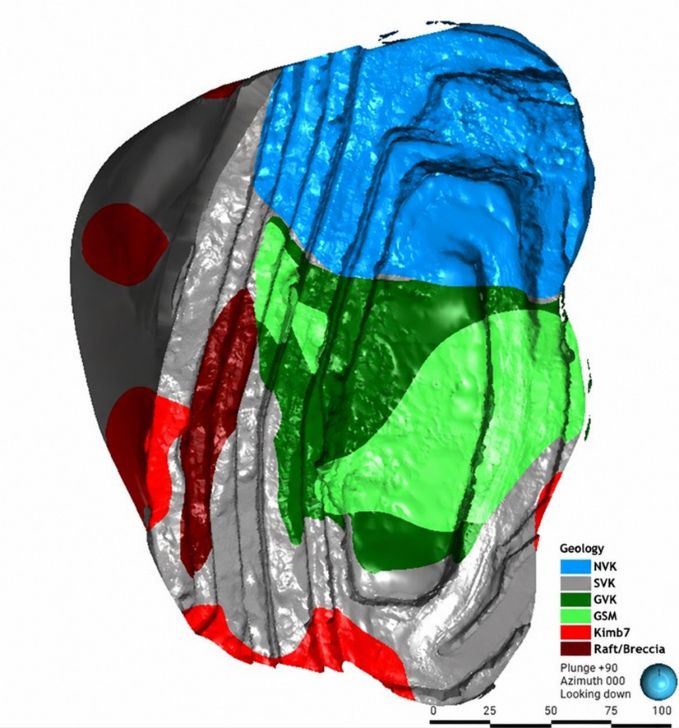
The Satellite Pipe is dominated by Kimberley-type pyroclastic kimberlite (KPK) and less abundant Kimberley-type pyroclastic kimberlite with extrusive features (KPKe) and resedimented volcaniclastic kimberlite (RVK) with minor amounts of coherent kimberlite (CK) classified as hypabyssal kimberlite (HK).
The current understanding of the geology of Satellite is that the pipe consists of six kimberlite domains: southern volcaniclastic kimberlite (SVK), northern volcaniclastic kimberlite (NVK), green volcaniclastic kimberlite (GVK), KIMB7 and the central coherent kimberlite (CCK). The last domain (GVK-M; also referred to as GVK-SVK-Mixed) is a mixed domain dominated by GVK and significant SVK blocks with minor amounts of KIMB7.
Resources
1.8 ct/100t
6 kimberlite domains
91 Mt
Total resource inventory (dry), Dec 2025
1.6 M ct
Estimated in-situ diamond content
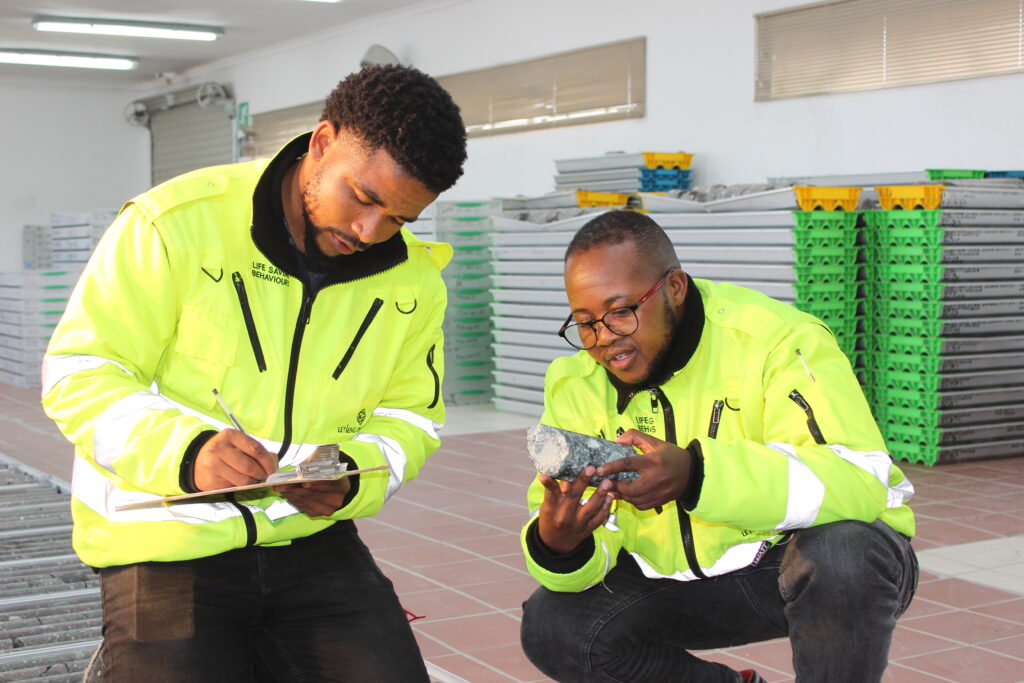
Letšeng Diamonds is a unique operating kimberlite mine with an average grade of 1.8 carats per hundred tonnes. Despite its relatively low grade, the mine remains highly commercial and is recognized as the highest average dollar-per-carat kimberlite mine in the world. It is renowned for producing exceptional, high-quality white Type II diamonds.
As at 31 December 2025, the total resource inventory was estimated at 91 million tonnes (dry), of which 73% is classified as Indicated Resources and the remaining 27% as Inferred Resources. The in-situ diamond content was estimated at 1.6 million carats, with 76% contained within the Indicated Resource category.